If you’re looking for drug rehab near Bangor, Maine, you’re taking an important step. Treatment works, and people recover. The question is finding the right support to get there.
Finding the right drug rehab center for you or a loved one doesn’t have to be difficult. At ENSO Recovery, Maine residents are given a personalized treatment plan for comprehensive recovery support from detox to aftercare support.
What Substance Use Disorder Treatment Actually Means
Substance use disorder is a medical condition that changes how the brain responds to drugs or alcohol. According to the National Institute on Drug Abuse, addiction is a chronic disease that affects brain function and behavior. Like diabetes or high blood pressure, it needs ongoing care.
Treatment addresses both the physical dependence and the underlying reasons people use substances. That might include trauma, mental health conditions like depression or anxiety, chronic pain, or situational stress. Good programs help you build skills to manage cravings, handle difficult emotions, and address practical needs.
Recovery isn’t one-size-fits-all. Some people need medical detox to safely withdraw. Others benefit from outpatient therapy while living at home. Many do well with medication-assisted treatment that combines FDA-approved medications with counseling. The best approach depends on the substance you’re using, how long you’ve been using it, your health status, and what’s happening in your life.
Who Benefits From Drug Rehab
You don’t have to hit rock bottom before reaching out for drug rehab, especially if you live in Penobscot County and are looking for help. Earlier intervention usually leads to better outcomes. Common signs that treatment might help include using more of a substance than you intended, spending significant time obtaining or recovering from substance use, continuing to use despite negative consequences, or experiencing withdrawal symptoms when you stop.
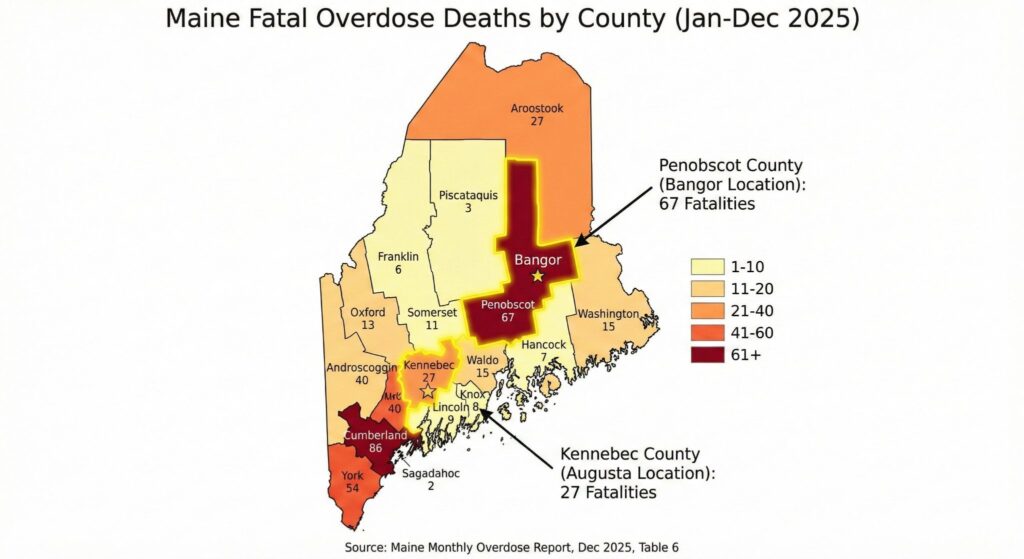
While fatal overdoses are trending down in the state, Penobscot County accounted for 17% (67) of Maine’s fatal overdose in 2025, second only to Cumberland County’s 86 deaths, according to Maine.gov statistics.
Treatment helps people who use alcohol, opioids like heroin or fentanyl, prescription painkillers, stimulants such as cocaine or methamphetamine, and other substances. Many people struggle with more than one substance, and quality programs address polysubstance use. Co-occurring mental health conditions like anxiety, depression, PTSD, or bipolar disorder are common, and effective treatment addresses both conditions together.
Drug Rehab Treatment Levels and What to Expect
Maine offers a range of substance use disorder (SUD) treatment options tailored to different needs, often following criteria set by the American Society of Addiction Medicine (ASAM) for appropriate placement. You may move between levels as you progress in your recovery journey.
Here are the key levels of treatment intensity available:
| Treatment Level | Goal | Duration/Schedule | Best For / Role in Recovery |
| Medical Detoxification (Detox) | Safe, supervised withdrawal management with 24/7 medical monitoring. | Typically lasts three to seven days. | A critical first step for physical stabilization, but it is not a substitute for long-term recovery care. |
| Residential Treatment (Inpatient Rehab Maine) | Intensive, structured care in a live-in facility environment. | Programs vary in length from a few weeks to several months. Includes daily therapy sessions, educational workshops, and skills training. | Individuals who need a high level of structure or have not succeeded with outpatient care previously. |
| Intensive Outpatient Programs (IOP Maine) | Provide significant treatment hours while allowing you to live at home. | Typically meets three to five days per week for several hours per day. Focuses on group therapy, individual counseling, and skills training. | Individuals who need to manage responsibilities like work or family life while developing coping strategies and identifying triggers. |
| Standard Outpatient Treatment (Outpatient Counseling) | Ongoing support to maintain progress and prevent relapse after completing a more intensive program. | Involves regular counseling, generally one to two sessions per week. | Individuals who are stable in their recovery and require continued monitoring and support. |
Evidence-Based Therapies and Medications Near Bangor Maine
Behavioral therapies form the foundation of most drug rehab treatment programs. Cognitive behavioral therapy helps you recognize thought patterns that lead to substance use and develop healthier responses. Motivational interviewing strengthens your commitment to change.
For opioid use disorder, medications like buprenorphine, methadone, and naltrexone significantly improve outcomes. Buprenorphine reduces cravings and withdrawal. Methadone stabilizes brain chemistry. Naltrexone blocks opioid receptors. Research shows that medication combined with counseling is more effective than either approach alone.
Alcohol use disorder also has FDA-approved medications. Naltrexone reduces drinking by blocking some of alcohol’s rewarding effects. Acamprosate helps restore chemical balance and reduces cravings. Mental health counseling addresses co-occurring conditions, with integrated treatment producing better outcomes.
How Long Drug Rehab Takes in Maine
The National Institute on Drug Abuse notes that research indicates most people need at least three months of treatment to see significant improvement. Longer treatment generally leads to better outcomes. That doesn’t mean you’re locked into one program for months. It means staying engaged in some form of care, whether that’s intensive outpatient treatment, regular counseling, medication management, or peer support.
Recovery is a process. Some people maintain continuous abstinence after treatment. Others experience lapses and return to care. Aftercare planning starts during treatment. Good programs help you develop a plan for ongoing support after formal treatment ends, including regular therapy, participation in mutual aid groups like AA or NA, medication management, recovery housing, or connection to community resources.
Understanding Insurance and Costs in Maine
Most health insurance plans cover substance use disorder treatment. The Mental Health Parity and Addiction Equity Act requires insurers to cover addiction treatment on par with medical and surgical benefits.
MaineCare, Maine’s Medicaid program, covers comprehensive substance use disorder services including outpatient counseling, intensive outpatient programs, residential treatment, medication-assisted treatment, and recovery support. If your income falls within MaineCare eligibility limits, you can access treatment with little or no out-of-pocket cost. Apply at MyMaineConnection.gov or get help from Consumers for Affordable Health Care at 1-800-965-7476.
Private insurance coverage varies by plan. Before choosing a program, verify your benefits and confirm the provider is in-network. Ask about your deductible, copays, and any limits on days of treatment. Many treatment centers can verify your benefits for you.
If you don’t have insurance or your benefits are limited, there’s an option for you. Some programs offer sliding scale fees based on income. The SAMHSA National Helpline at 1-800-662-4357, or text your zipcode to HELP4U (435748) can connect you to low-cost or free treatment options in your area.
Local and State Resources Near Bangor
Maine has resources specifically for people in the Bangor area. The Maine Department of Health and Human Services Office of Behavioral Health maintains information about licensed treatment providers serving Penobscot County and surrounding areas.
For immediate help, the Maine Crisis Line provides 24/7 support at 1-888-568-1112. Peer support groups meet regularly in Bangor. Downeast Intergroup supports AA meetings in districts covering Bangor and surrounding areas. The Bangor Area Recovery Network offers recovery support services and maintains a calendar of local meetings.
The SAMHSA Treatment Locator allows you to search for licensed treatment facilities by location and filter by services offered, including detox programs, residential facilities, outpatient clinics, and medication providers near Bangor.
What to Look for in a Quality Program
When comparing Maine addiction treatment options near Bangor, focus on key indicators of quality care to ensure the best outcome for recovery.Core Program Quality Checks
- Licensure and Accreditation: Check for state licensure, which is required by the Maine Department of Health and Human Services. Look for national accreditation from bodies like The Joint Commission or CARF, which signals the program meets national standards for patient care and safety.
- Evidence-Based Practices: The most effective drug rehab programs use therapies supported by research, such as Cognitive Behavioral Therapy (CBT) and Motivational Interviewing (MI).
- Medication-Assisted Treatment (MAT) Availability: If dealing with opioid or alcohol use disorder, confirm the program offers or coordinates access to FDA-approved medications (like buprenorphine, methadone, or naltrexone), as research shows this significantly improves long-term outcomes.
Staffing and Comprehensive Care
- Qualified Staff: Ensure the program is staffed by licensed clinicians, certified addiction counselors, and medical professionals.
- Holistic Treatment: Quality care addresses the whole person. Treatment should integrate care for co-occurring mental health conditions (like depression or anxiety), medical needs, and practical issues such as housing and employment.
Focus on Long-Term Recovery
- Aftercare Planning: Ask about the program’s strategy for support after formal treatment ends. This includes how they connect patients to ongoing resources like regular therapy, mutual aid groups (AA/NA), medication management, and recovery housing.
Our Location: Drug Rehab near Bangor, Maine
ENSO Recovery operates comprehensive treatment programs in Augusta and Sanford, Maine. While we’re not located directly in Bangor, Maine’s former timber hub and home of the Paul Bunyan Statue, we serve people from throughout the state, including the Bangor area. Augusta is about 70 miles south of Bangor, roughly a 75-minute drive. Our outpatient services allow you to travel for appointments while continuing to live at home. For people who need residential support, we offer recovery housing at both locations.
Why Choose ENSO Recovery For Drug Rehab
At ENSO Recovery, our programs include medication-assisted treatment for opioid use disorder, intensive outpatient therapy, standard outpatient care, and case management services. We combine clinical treatment with practical support to address the full range of issues affecting recovery.
Our Augusta location provides individual counseling, group therapy, life skills training, and mental health services. For people using medication-assisted treatment, our medical team can prescribe and manage buprenorphine or coordinate injectable naltrexone treatment.
Recovery housing is available for both men and women at Augusta and Sanford facilities. We operate Level II and Level III homes certified by the Maine Association of Recovery Residences. All houses accept people on medication-assisted treatment and provide structure, peer support, and accountability.
Case management helps you navigate systems and access resources beyond clinical treatment. Our case managers assist with applications for benefits, housing programs, employment resources, and other practical needs. We work with people who have limited financial resources and accept MaineCare while helping clients verify private insurance coverage.
How to Get Started in Your Drug Rehab Journey
Contact ENSO Recovery Augusta facility at 207-245-1800. Our admissions team can answer your questions, verify your insurance coverage, and schedule an initial assessment. We often schedule first appointments within days of initial contact.
In some cases, initial assessments and certain MAT services can be done via telehealth appointments.
During your assessment, we’ll discuss your substance use history, medical and mental health needs, living situation, and goals for treatment. This conversation helps us recommend the right level of care and develop a plan tailored to your situation. If medications are appropriate, we can begin stabilization quickly and pair it with counseling and case management.
You can also visit our contact page to submit an online form. We’re here to support you from the first phone call forward.
Additional Drug Rehab Support Services in Maine
Beyond formal treatment programs, Maine offers several support services. Recovery coaches provide peer support and practical assistance. The Maine Office of Behavioral Health funds recovery coaching services across the state. Recovery Community Centers provide a welcoming space for people in recovery to connect with peers and access resources.
211 Maine is a free information and referral service. Dial 211 or visit 211maine.org to connect with social services, including substance use treatment, housing assistance, and other community resources.
Naloxone (Narcan) is available for free across Maine through the Get Maine Naloxone program. Anyone can obtain and carry naloxone to reverse an opioid overdose. Maine’s Good Samaritan Law provides legal protection when you call for help during a suspected overdose. For veterans, the Veterans Crisis Line offers specialized support. Call 988 and press 1, or text 838255.
Frequently Asked Questions About Drug Rehab Near Bangor
Does MaineCare Cover Drug Rehab in Maine?
Yes. MaineCare covers comprehensive substance use disorder treatment, including outpatient counseling, intensive outpatient programs, residential treatment, and medication-assisted treatment. Apply at MyMaineConnection.gov.
How Long Does Treatment Take?
Research shows most people benefit from at least three months of treatment. This might include intensive outpatient care followed by regular counseling and support. Length varies based on individual needs.
Can I Work While in Outpatient Treatment?
Yes. Outpatient programs are designed to allow you to maintain employment and family responsibilities. Most programs offer flexible scheduling, including evening sessions.
Are Medications Like Suboxone Allowed in Recovery Housing?
At ENSO Recovery, yes. All our recovery residences accept people on medication-assisted treatment. Some programs require abstinence from these medications, but evidence shows medication improves outcomes for opioid use disorder.
What if I Don’t Have Insurance For Drug Rehab?
Options exist. Contact the SAMHSA National Helpline at 1-800-662-4357 for referrals to low-cost or free treatment. Some programs offer sliding scale fees based on income.
Crisis and Emergency Information
If you or someone you know is in crisis, help is available immediately. The 988 Suicide & Crisis Lifeline provides free, confidential support 24 hours a day, 7 days a week, 365 days a year. Call or text 988 to reach trained counselors who can provide support for mental health crises, substance use concerns, or emotional distress. Services are available in English and Spanish, with interpretation in over 240 other languages.
For life-threatening medical emergencies, call 911. If someone has overdosed, experienced a seizure, has chest pain, difficulty breathing, or shows signs of a medical emergency, call 911 immediately. Emergency responders can provide life-saving treatment and transport to the hospital. Don’t delay calling because of fear of legal consequences. Getting help quickly can save a life.
Helpful Links
For additional information about substance use disorder treatment and recovery:
- Maine.gov: December 2025 Drug Overdose Data
- National Institute on Drug Abuse: Treatment Approaches for Drug Addiction
- SAMHSA National Helpline: 1-800-662-HELP (4357)
- SAMHSA Treatment Locator
- Maine DHHS Office of Behavioral Health: Substance Use Disorder Services
- 988 Suicide & Crisis Lifeline
- Maine Office of MaineCare Services
- MaineCare (Maine Medicaid) Information