Whether you’ve made the decision to enter or or send a loved one to recovery, you’re probably wondering exactly how long one should plan to stay. Unlike clinical detox or inpatient programs that have fixed durations, sober living is meant to be a bridge between structured onsite care and living independently. Knowing the basics will help you determine what to plan for, including duration of stay.
Recovery residences in Maine are often referred to as sober houses. They provide a stable environment to practice skills learned in treatment. For many, the answer of how long to stay depends on personal progress, the strength of the local support network, and individual goals.
Understanding the Role of Recovery Residences
A recovery residence is a community-based setting that demands accountability and offers peer support. These homes provide a substance-free living space where individuals can transition from the high supervision of clinical treatment to everyday life.
For residents in Augusta, Sanford, or anyplace else Southern and Central Maine, organizations like the Maine Association of Recovery Residences (MARR) ensure that these homes meet high standards for safety and ethics. Whether you are attending an Intensive Outpatient Program (IOP) in Sanford or working a full-time job in Augusta, the structure of a sober home provides a vital layer of protection against the triggers found in traditional housing environments.
Who Benefits from Sober Living?
Sober living can benefit anyone transitioning out from a more intensive care, such as residential treatment or a Partial Hospitalization Program (PHP). With that in mind, certain individuals may need a longer stay for the best results possible.
This includes people with history of relapse, co-occurring mental health disorders, and others whose home environments are not supportive for recovery. For many Maine residents, the rural nature of the state can lead to isolation; staying in a recovery residence provides a built-in community that counteracts this risk. By living among peers who share similar goals, residents develop the social skills and resilience needed to navigate life’s challenges without returning to substance use.
What to Expect During Your Stay
The experience in a recovery residence evolves as you progress through different phases of recovery. While the specific rules vary by house, most MARR-certified residences in Maine follow a similar structure.
- Structure and Accountability: Residents participate in house meetings, adhere to curfew, and help with household chores.
- Peer Support: Living with others in recovery provides a level of empathy and encouragement that may not be available elsewhere.
- Life Skills Development: Stays focus on practical goals such as finding employment, managing finances, and learning to cook healthy meals.
- Integration with Clinical Care: Many residents at ENSO Recovery combine their stay with outpatient services, attending group therapy and individual counseling while living in a supportive home.
Clinical Elements and the Importance of Stability
While recovery residences are not clinical facilities, they often work in tandem with medical and therapeutic providers. For many individuals in Central and Southern Maine, this includes the integration of Medication-Assisted Treatment (MAT).
At ENSO Recovery, our residences in Sanford and Augusta are MAT-friendly, meaning they support the use of FDA-approved medications like Suboxone or Vivitrol. Clinical research from the National Institute on Drug Abuse (NIDA) indicates that treatment lasting at least 90 days significantly improves outcomes. By staying in a sober living environment for several months, residents give their brains the time needed to heal and rewire, making the transition to independent living much safer.
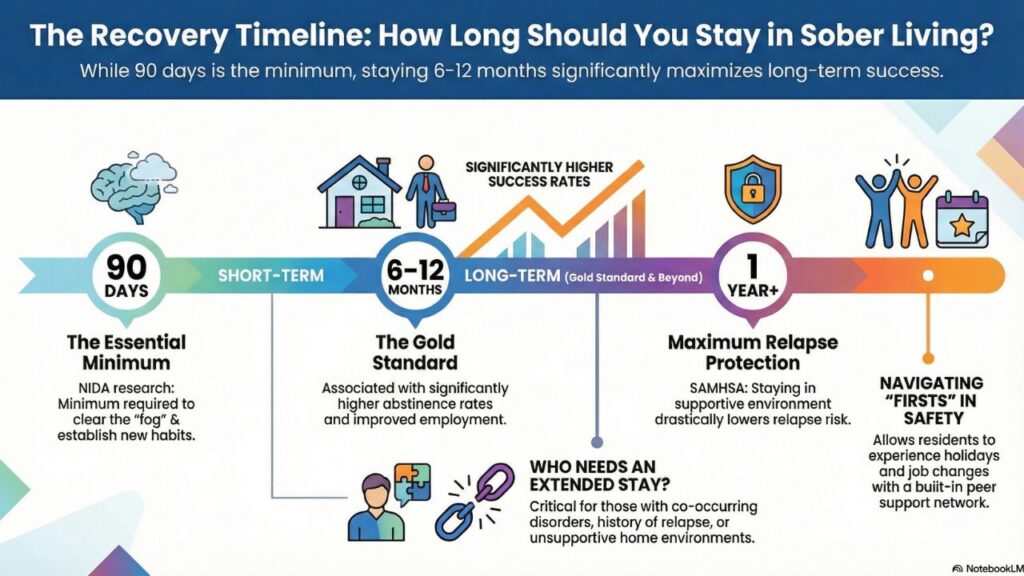
How Long Should I Stay in Sober Living?
The “right” length of stay is highly individualized, but research consistently points toward the benefits of longer durations.
Short-Term Stays (90 Days)
A 90-day stay is often considered the minimum timeframe for establishing new habits. This duration is suitable for individuals with strong external support systems and stable employment waiting for them. It provides enough time to clear the “fog” of early recovery and establish a baseline for sobriety.
Long-Term Stays (6 to 12 Months)
Stays of six months or longer are associated with significantly higher rates of long-term abstinence, improved employment status, and reduced legal issues. An extended stay allows residents to experience various “firsts” in sobriety—such as holidays, job changes, or personal conflicts—while having the safety net of the recovery community. According to SAMHSA, individuals who remain in supportive environments for a year or more have a drastically lower risk of relapse.
Insurance, Costs, and Maine Resources
In Maine, the cost of sober living is typically paid out-of-pocket by the resident, similar to traditional rent. However, because these homes are classified as single-family dwellings under state law, they are often more affordable than independent apartments in the Portland area.
While insurance usually does not cover the “room and board” portion of a recovery residence, it often covers the associated clinical services, such as outpatient treatment or medication management. Additionally, the MaineHousing Recovery Residences Pilot Program and other state grants may provide subsidies for those who qualify, particularly for residents attending certified homes that accept MAT.
Choosing a Quality Recovery Residence: A Checklist
When comparing homes in Augusta, Sanford or anyplace else in Central and∂ Southern Maine, quality and safety should be your top priorities. Use this checklist to evaluate your options:
- MARR Certification: Is the home certified by the Maine Association of Recovery Residences? This ensures adherence to national safety and ethical standards.
- MAT Support: If you are utilizing Medication-Assisted Treatment, ensure the home is “MAT-capable” and supportive of your clinical path.
- House Culture: Does the home have a positive, supportive atmosphere? Ask to speak with current residents if possible.
- Proximity to Resources: Is the home close to public transportation, employment opportunities, and your clinical providers?
- Clear Policies: Does the home have a written resident handbook detailing rules, expectations, and grievance procedures?
Why Choose ENSO Recovery Residences
ENSO Recovery operates gender-specific, MARR-certified recovery residences in both Sanford and Augusta. Our homes are designed to be more than just a place to stay; they are an integral part of our collaborative approach to wellness.
We understand that for many in Central and Southern Maine, finding a safe place to live while in recovery is the biggest barrier to success. Our homes in Sanford and Augusta offer an alternative to the high-stress environment of the city, providing shorter wait times and a focus on practical solutions. By combining our residences with Case Management Services, we help residents navigate local resources, secure employment, and build a robust network of support that continues long after they move out.
Our Locations and Contact Information
If you are considering a recovery residence for yourself or a loved one, our team is here to help you determine the best fit and length of stay.
- Sanford Residences: Serving Southern Maine and York County.
- Augusta Residences: Serving Central Maine and Kennebec County.
Start the conversation by calling ENSO Recovery at 207-245-1800. We can discuss our current bed availability, explain our phases of recovery, and help you verify any benefits that may apply to your outpatient care.
Emergency and Crisis Resources
If you are experiencing a medical emergency, call 911. For immediate crisis support in Maine, help is available 24/7.
- 988 Suicide & Crisis Lifeline: Call or text 988 for free, confidential support.
- Maine Crisis Line: Call 1-888-568-1112 for local crisis intervention services.