Those experiencing opioid withdrawal can be left with questions about what the process is like and if it is dangerous. If you live in Augusta, Sanford, or surrounding Maine communities, knowing what to expect during withdrawal provides reassurance during one of the most challenging phases of treatment. While withdrawal symptoms can feel overwhelming, they are manageable with proper medical support and rarely life threatening.
Understanding the opioid withdrawal timeline can help you prepare for recovery from opioid use disorder. ENSO Recovery is with you or your loved one every step of the way. From early detox to treating withdrawal symptoms, the clinical team in Maine tailors a plan to fit every patient.
What Is Opioid Withdrawal?
Opioid withdrawal occurs when someone with a physical dependence stops or reduces use. Your body must readjust to functioning without substances like oxycodone, hydrocodone, fentanyl, or heroin.
Medical professionals in Augusta emphasize that supervised withdrawal management is the safest path. Healthcare providers monitor vital signs and use medications to ease discomfort, preventing the complications that often lead to relapse.
How Long Does Opioid Withdrawal Last? The Complete Timeline
The opioid withdrawal timeline depends on whether you have been using short-acting or long-acting opioids. Short-acting opioids include heroin, fentanyl, and immediate-release prescription pain medications. Long-acting opioids include extended-release formulations and methadone.
Short-Acting Opioids: Hours 6 to 12 After Last Use
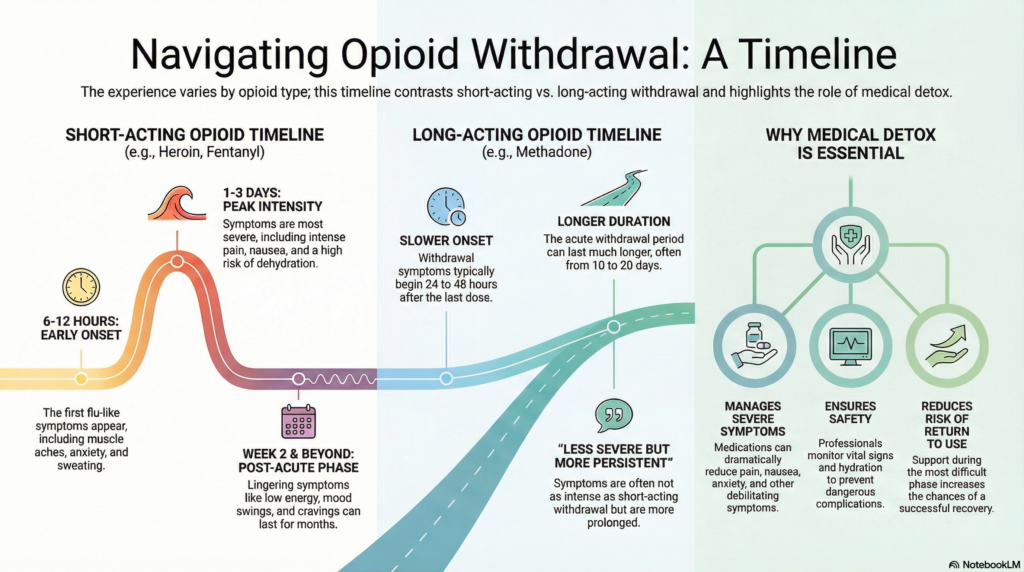
Withdrawal from short-acting opioids typically begins 6 to 12 hours after your last dose. You might first notice cravings around the time you would normally take your next dose. Early symptoms include anxiety, restlessness, muscle aches, increased tearing, sweating, yawning, runny nose, and difficulty sleeping. Many people describe these initial symptoms as feeling like the onset of a bad flu.
During this early phase, you may still manage symptoms through distraction and support from loved ones. However, symptoms progressively worsen over the next several hours. This is when professional medical support becomes particularly valuable as medications can be introduced to ease discomfort before symptoms become severe.
Hours 12 to 24: Symptoms Intensify
As you approach the 24-hour mark, withdrawal symptoms typically intensify. You may experience dilated pupils, rapid heartbeat, elevated blood pressure, increased sweating, chills, and goosebumps (sometimes called “cold turkey” because of how your skin looks). Anxiety and irritability increase noticeably. Sleep becomes more difficult or impossible.
The muscle aches that began earlier often worsen significantly. Many people report severe leg cramps or bone pain that prevents finding any comfortable position. Without medical support, this period poses the highest risk for returning to opioid use to relieve discomfort.
Days 1 to 3: Peak Withdrawal Symptoms
For most short-acting opioids, withdrawal symptoms peak between 36 and 72 hours after the last dose. This is the most challenging phase of acute withdrawal, with both physical and psychological distress at its worst.
Peak Withdrawal Symptoms Include:
- Severe nausea and vomiting
- Diarrhea and abdominal cramping
- Intense muscle and bone pain
- Inability to sleep (insomnia)
- Extreme fatigue and difficulty concentrating
- Depression and intense cravings
Why Medical Detox is Essential:
Medical detox programs in Augusta and across Maine emphasize supervised care during this critical period. Medications like buprenorphine can be introduced at the appropriate time to dramatically reduce symptom severity. Other supportive medications address specific issues, including:
- Nausea and diarrhea
- Muscle aches and pain
- Anxiety
Healthcare providers continuously monitor your vital signs, hydration status, and overall safety to ensure the most comfortable and safe withdrawal possible.
Days 4 to 7: Symptoms Begin to Improve
After the peak period, acute withdrawal symptoms gradually diminish. By the fourth or fifth day, many physical symptoms improve noticeably. Nausea and vomiting typically decrease, your appetite may return, and gastrointestinal symptoms become less severe. Muscle aches and bone pain start to ease, though they may persist at lower levels.
Week 2 and Beyond: Post-Acute Withdrawal
While acute physical symptoms resolve within 10 days, many experience Post-Acute Withdrawal Syndrome (PAWS). This includes low energy, mood disturbances, and cravings that can last for months, highlighting the need for ongoing medication-assisted treatment (MAT).
Long-Acting Opioids: A Different Timeline
The timeline differs significantly for long-acting opioids such as extended-release oxycodone, morphine, or methadone. Withdrawal symptoms from these medications typically begin 24 to 48 hours after your last dose. Peak symptoms occur around day 3 after you stop using. The acute withdrawal period for long-acting opioids often lasts 10 to 20 days, considerably longer than for short-acting opioids.
Because long-acting opioids remain in your body longer, the onset of withdrawal is delayed, but the overall duration extends. The slower onset can be deceptive, as you may feel relatively well for the first day or two before symptoms emerge. When symptoms appear, they follow a similar pattern to short-acting opioid withdrawal but on a prolonged timeline with symptoms that are often described as less severe but more persistent.
Factors That Affect Your Opioid Withdrawal Experience
Several factors influence how long opioid withdrawal lasts and how severe your symptoms become:
- Type of Opioid: The specific opioid used and its half-life are the most significant factors, determining when symptoms start and how long they persist.
- Duration and Intensity of Use: Longer-term, higher-dose use generally leads to more severe and prolonged withdrawal.
- Individual Health and Genetics: Your individual metabolism, genetics, and overall physical and mental health status impact the experience. Co-occurring mental health conditions can lead to more pronounced psychological symptoms.
The Role of Medical Detox in Opioid Withdrawal
Whether you undergo medically supervised withdrawal or attempt to detox without medical support dramatically affects both the severity of symptoms and the timeline.
Medical Detox Programs use medications to ease symptoms and can sometimes shorten the acute withdrawal period, making the experience significantly more tolerable and safer.
Medical Opioid Withdrawal Management Available in Maine
Professional medical detox offers significant advantages over attempting withdrawal without support. Treatment providers in Augusta, Sanford, and throughout Maine offer evidence-based medical withdrawal management that reduces discomfort while improving safety and outcomes.Core Medications for Opioid Withdrawal
Medical detox offers a safer, more comfortable alternative to “cold turkey” methods. ENSO Recovery utilizes evidence-based medications to stabilize patients.
Professional medical detox offers a safer, more comfortable alternative to “cold turkey” methods. ENSO Recovery utilizes evidence-based medications to stabilize patients.
Core Medications
- Buprenorphine (Suboxone): A partial opioid agonist that eliminates withdrawal symptoms and cravings without producing a high.
- Methadone: A long-acting agonist effective for long-term maintenance.
- Supportive Meds: Clonidine (for blood pressure/sweating), sleep aids, and anti-nausea medications.
Maine has expanded access, allowing providers to prescribe buprenorphine more easily, increasing availability for Maine residents.
Supportive Medications and Care
In addition to the core opioid withdrawal medications, medical detox programs use supportive medications to manage specific symptoms like nausea, vomiting, diarrhea, pain relievers for muscle aches, sleep aids, and medications to address anxiety.
Healthcare providers continuously monitor your vital signs, hydration status, and overall safety to ensure the most comfortable and safe withdrawal possible.
Evidence-Based Therapies That Support Long-Term Recovery From Opioid Withdrawal
While medical detox addresses acute physical dependence, sustainable recovery requires comprehensive treatment that addresses the psychological, behavioral, and social aspects of opioid use disorder.
Sustainable recovery in Maine requires addressing the psychological aspects of addiction through:
- Cognitive Behavioral Therapy (CBT): Identifying triggers and developing healthy coping skills.
- Motivational Interviewing (MI): Strengthening internal motivation for change.
- Group & Family Therapy: Reducing isolation and repairing relationships damaged by substance use.
The Treatment Continuum For Opioid Withdrawal in Maine
The treatment continuum starts with Medical detox, offering 24-hour supervision for safe withdrawal. This is followed by Residential/Inpatient treatment (intensive 24-hour therapeutic care for severe cases). Less intensive options include Partial hospitalization (PHP), Intensive outpatient programs (IOP) (support while maintaining daily life), and finally, Outpatient treatment for ongoing therapy and medication management.
ENSO Recovery specializes in providing intensive outpatient (IOP) and standard outpatient treatment. Their services are designed to offer appropriate, flexible support as your needs change during your recovery journey.
Medication-Assisted Treatment for Long-Term Support
Medication-assisted treatment combines medication for opioid use disorder with counseling and behavioral therapies. This approach has the strongest evidence base for improving outcomes, reducing overdose risk, supporting sustained recovery, and improving quality of life.
Buprenorphine and methadone are the most commonly used medications for long-term maintenance treatment. Unlike their use during detox, when they help ease withdrawal symptoms over a short period, maintenance treatment involves ongoing medication to prevent cravings, block the effects of other opioids, and allow you to stabilize your life while engaging in recovery activities.
Extended-release naltrexone is another medication option for some people. Unlike buprenorphine and methadone, naltrexone blocks opioid receptors.
ENSO Recovery provides medication-assisted treatment using medications such as buprenorphine (Suboxone) and naltrexone (Vivitrol). Their skilled providers work with you to determine the most appropriate medication approach while providing comprehensive counseling and support services.
MAT combines FDA-approved medications with counseling and is the “gold standard” for reducing overdose risk.
Costs For Opioid Withdrawal in Maine
Understanding insurance coverage helps you access the care you need. The Mental Health Parity and Addiction Equity Act requires insurance plans to cover substance use disorder treatment at levels comparable to medical and surgical care. Most commercial insurance and MaineCare (Maine’s Medicaid program), must provide coverage for detox, residential treatment, outpatient services, and medications for opioid use disorder.
MaineCare has significantly expanded coverage for substance use disorder treatment in recent years. Eligible Maine residents can access medically supervised detox, outpatient treatment programs, medication-assisted treatment, and other recovery support services through MaineCare. The state has worked to increase the number of providers accepting MaineCare and to reduce barriers to accessing evidence-based treatments.
Recovery Support and Aftercare Resources in Augusta
Ongoing support after completing intensive treatment is crucial for sustaining recovery. Aftercare planning should begin early in treatment and continue as an evolving process.
The Maine Drug Data Hub provides comprehensive information about substance use disorder resources throughout the state. SAMHSA’s national helpline offers free, confidential support 24 hours a day, 7 days a week for individuals and families facing mental health and substance use challenges.
How to Choose Quality Opioid Use Disorder Treatment
Selecting the best addiction treatment program is a critical step that significantly impacts long-term recovery outcomes. Quality programs distinguish themselves through a commitment to evidence-based practices and comprehensive, individualized patient care.
Key Indicators of a Quality Treatment Program:
- Accreditation and Licensing: Programs must be licensed by the state and accredited by national organizations like The Joint Commission or CARF. This ensures the facility meets established standards and ethical practices.
- Evidence-Based Treatment: Look for programs that utilize proven, effective approaches. These include Medication-Assisted Treatment (MAT), Cognitive Behavioral Therapy (CBT), Motivational Interviewing (MI), and other therapies with demonstrated effectiveness for opioid use disorder (OUD).
- Integrated Care for Co-Occurring Disorders: High-quality programs address co-occurring mental health disorders (dual diagnosis). Integrated treatment that addresses both substance use and mental health simultaneously consistently produces better outcomes.
- Individualized Treatment Planning: Effective programs avoid a one-size-fits-all model. Make sure your Maine facility tailors a plan to fit your needs.
- Expert and Licensed Staff: The treatment team should include licensed clinicians with specialized training in addiction treatment.
- Comprehensive Support Services: Quality providers offer aftercare planning and connect patients to ongoing support resources. They may also engage families in therapy when appropriate and with patient consent.
- Transparency and Continuous Improvement: Programs should be transparent about their treatment approaches, costs, and success rates.
Why Choose ENSO Recovery For Opioid Withdrawal
ENSO Recovery serves Augusta, Portland, Sanford, and communities throughout Maine with comprehensive, evidence-based treatment for opioid use disorder. Their person-centered approach recognizes that each individual’s path to recovery is unique.
The availability of certified recovery residences in both Augusta and Sanford sets ENSO Recovery apart. These gender-specific homes provide stable, supportive environments where residents can focus on recovery while accessing outpatient treatment services. The homes accept individuals on medication-assisted treatment, recognizing these medications as essential evidence-based tools rather than barriers to recovery.
How to Start Opioid Withdrawal Treatment in Maine
Taking the first step toward recovery from opioid use disorder is a courageous decision. ENSO Recovery makes beginning treatment straightforward. You or your loved ones can call 207-245-1800 to speak with a recovery specialist who can answer questions, verify insurance benefits, and schedule an initial appointment.
ENSO Recovery has two addiction treatment centers in Maine. One at 14 Winter St., Sanford, Maine and a second at 90 Western Avenue in Augusta.
Crisis Support and Emergency Resources
For individuals experiencing a mental health or substance use crisis, immediate support is available. The 988 Suicide & Crisis Lifeline provides free, confidential support 24 hours a day, 7 days a week. Trained counselors can provide support, information about local resources, and help in crisis situations. Call or text 988 or visit the 988 Lifeline website for immediate assistance.
For medical emergencies including suspected overdose, difficulty breathing, loss of consciousness, or other life-threatening situations, call 911 immediately. Maine’s Good Samaritan law provides protection from arrest or prosecution for individuals who seek emergency help for themselves or others experiencing a drug overdose.
Helpful Links
The following resources provide additional information about opioid withdrawal, treatment options, and recovery support:
- SAMHSA National Helpline
- SAMHSA Medication-Assisted Treatment Information
- MedlinePlus Opioid Withdrawal Information
- Maine Drug Data Hub
- SAMHSA Opioid Treatment Program Directory
- 988 Suicide & Crisis Lifeline
- Healthdirect.gov: Opioid Withdrawal
- American Addiction Centers: Opioid Withdrawal Timeline
- National Institute of Health: Opioid Withdrawal Management
- Cleveland Clinic: Opioid Withdrawal
- Mayo Clinic: Tapering Off Opioids: When and How