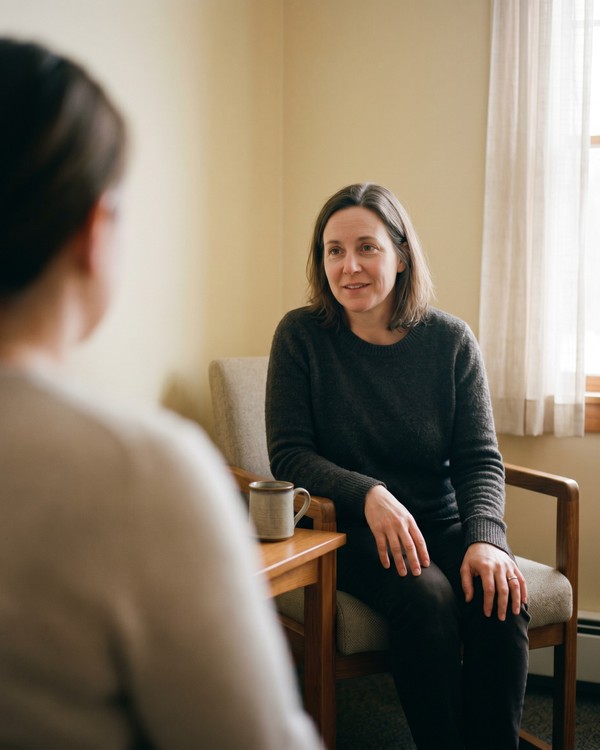
Female Maine community health counselor in a plain dark sweater seated in a small outpatient consult room afternoon, leaning slightly forward in active listening toward a client seen out of focus from behind in the foreground, warm window light.
Alcohol addiction treatment in Maine

Treatment for alcohol addiction in Maine.

Outpatient medical and behavioral treatment for alcohol use disorder at our clinics in Augusta and Sanford. Oral naltrexone paired with weekly individual therapy, daily structured IOP group support, and hands-on case management. We don’t run an insurance-dictated discharge clock, and we don’t discharge people for relapsing.

How we treat alcohol addiction

Medication and structured care built around your week.

Medication and therapy are not alternatives. Oral naltrexone eases the biology of cravings and the drink-reward response while group therapy, individual counseling, and case management build lasting stability.

Oral naltrexone

Daily non-opioid tablet prescribed on site

Blocks alcohol’s rewarding effects and reduces cravings so counseling and daily structure can take hold. Oral naltrexone is prescribed by our MAT provider and can be started while you are still drinking, provided opioids are not in your system.

Daily structured IOP group

Morning clinical structure, 9:00 AM to 12:00 PM

Three-hour morning group sessions focused on relapse prevention, emotional regulation, and practical life skills. Clients start five days a week and step down in frequency as recovery stabilizes.

Weekly individual counseling

In person or telehealth

One-on-one sessions with a licensed clinician using CBT, motivational interviewing, and trauma-informed care to address the stressors, depression, anxiety, or trauma underneath drinking.

Case management & MAT integration

Practical stability and polysubstance care

Hands-on help with housing, MaineCare enrollment, transportation, employment, and court documentation, plus shared-chart Suboxone®, Subutex®, Sublocade®, or Brixadi® when opioids are also part of your history.

You don’t have to be sober to start treatment.

Oral naltrexone can be prescribed while you’re still drinking, and active alcohol use does not keep you from reaching out. Admissions completes your screening, our clinical team reviews your situation, and your plan starts from where you are. MaineCare accepted.

How alcohol addiction shows up

Signs of alcohol addiction.

Alcohol use disorder presents on a spectrum. Some of these will sound familiar; others may not. None require a final diagnosis before you can call us.

01

Drinking more or longer than intended.

You start with one drink and end up at five. You meant to stop hours ago, and the day is gone.

02

Wanting to cut down but not being able to.

You’ve tried to take a break or moderate, and it hasn’t held. The intention is there; the follow-through isn’t.

03

Cravings that interrupt the day.

A strong urge or pull to drink that arrives at predictable times or out of nowhere. The thought returns and is hard to put down.

04

Drinking is taking time away from things that matter.

Work, family, hobbies, sleep, money. Drinking is shaping the calendar more than the calendar is shaping the drinking.

05

Drinking despite the problems it is causing.

Health concerns, relationship strain, work issues, legal trouble, financial damage. The drinking continues anyway.

06

Tolerance or withdrawal.

Needing more alcohol to feel the same effect. Or feeling shaky, anxious, sweaty, or unable to sleep when not drinking. Both are clinical signs.

Several of these can be true at once and not feel like “addiction” yet. The clinical conversation is the same regardless of how you frame it. If any of this sounds familiar, call (207) 245-1800.

Honest about withdrawal

Alcohol withdrawal needs honest medical conversation.

For most clients at lower-to-moderate severity, treatment for alcohol use disorder can begin directly at the outpatient level. Oral naltrexone can be prescribed while you are still drinking, alongside behavioral counseling and structured group support starting right away without inpatient withdrawal management.

For clients at higher severity, alcohol withdrawal can be medically dangerous and sometimes requires inpatient monitoring during the first 72 hours. Enso is an outpatient program; we do not provide inpatient detox. When high-risk withdrawal history is part of the picture, our team refers to a medically supervised detox program first and picks up outpatient care once detox is complete.

If you’re experiencing acute alcohol withdrawal symptoms right now, including seizures, severe tremor, confusion, hallucinations, or fever, call 911 or go to the nearest emergency department. Alcohol withdrawal can be a medical emergency and isn’t safe to manage at home.

When inpatient detox may be the right next step

During your intake screening, let admissions know if any of these apply. Clinical indicators that typically require medically supervised detox before starting outpatient care include:

  • Heavy daily drinking, especially morning drinking
  • Prior alcohol withdrawal seizures
  • Prior delirium tremens (DTs)
  • Other serious health conditions, including liver disease
  • Multiple prior unsuccessful outpatient detox attempts
Common questions about alcohol treatment

Questions people have before starting alcohol treatment.

No. Active alcohol use does not keep you from reaching out to Enso, and oral naltrexone can be prescribed while you are still drinking. Admissions completes your screening, our clinical team reviews your situation, and your outpatient plan starts from where you actually are.

Yes. We accept all MaineCare and Medicaid plans for alcohol use disorder treatment, including oral naltrexone, weekly individual therapy, daily structured IOP group treatment, and case management. MaineCare covers behavioral health and addiction treatment in full for plans in good standing.

Our MAT provider prescribes daily oral naltrexone tablets to reduce alcohol cravings and block alcohol’s reward response. Medication pairs with weekly individual therapy with a licensed clinician, daily structured IOP morning group sessions (9:00 AM to 12:00 PM) when higher intensity is appropriate, co-occurring mental health counseling, and hands-on case management.

For most clients at lower-to-moderate severity, no. Outpatient treatment can begin directly once accepted. For clients at higher risk during withdrawal, including heavy daily drinking, prior alcohol withdrawal seizures, prior delirium tremens (DTs), or serious medical conditions, medically supervised inpatient detox comes first. Enso doesn’t provide inpatient detox, and we pick up outpatient care once detox completes.

Polysubstance use is one of the most common presentations we treat. Our clinical team addresses alcohol and co-occurring substance use in IOP group and weekly counseling while our MAT provider manages opioid recovery medication (Suboxone®, Subutex®, Sublocade®, or Brixadi®) on one shared chart.

Admissions answers Monday through Friday, 8:00 AM to 4:30 PM to complete your initial screening and send it to our clinical team to review and assess program fit. Once accepted, we schedule your first counseling or group session promptly.

Yes. Outpatient treatment is structured around everyday obligations. Weekly individual therapy is one hour, available in person or by telehealth at both clinics. When higher structure is needed, IOP meets as a daily morning group from 9:00 AM to 12:00 PM, leaving afternoons and evenings open.

You stay in treatment. A relapse is clinical information, not a discharge trigger. Your plan adjusts: counseling or group cadence usually tightens, your case manager helps stabilize practical needs, and your therapist works the stressor that drove the relapse. We don’t discharge people for relapsing.

Start alcohol treatment

We can help, even if you’re actively drinking.

You don’t have to quit on your own before reaching out. Fill out the form to start your intake screening so our clinical team can review your situation and build a plan that meets you where you are. MaineCare accepted, no referral required.