Telehealth at Enso

Therapy and MAT follow-up by secure video, when the rules allow it.

The first medical visit is in-person at our Augusta or Sanford clinic. After that, federal DEA rules and Maine state regulations decide how much of your care can happen by telehealth. We utilize telehealth where it’s legally and clinically appropriate, and we’re direct about where it’s not.

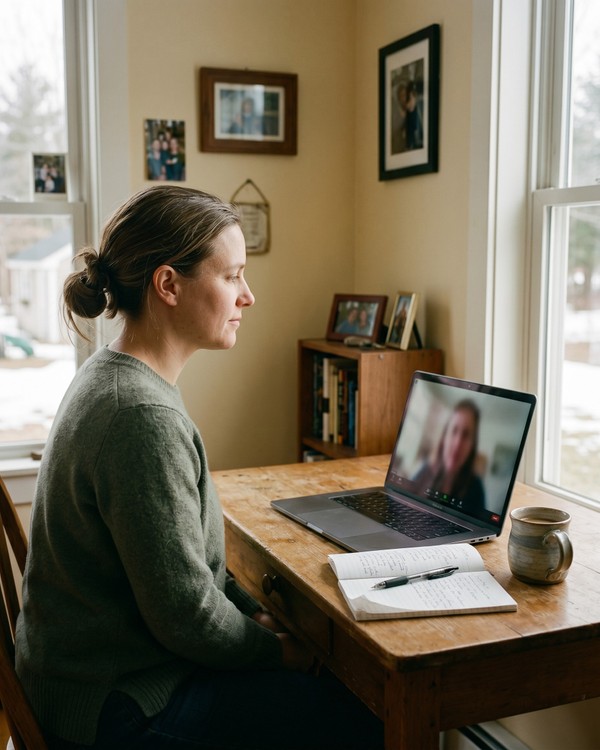
A Maine adult in a plain sweater seated at a simple wood desk at home looking calmly at a laptop screen for a telehealth visit, soft afternoon side window light, painted walls, no medical props in frame
What is available by telehealth

The clean line between video visits and in-person work.

Some Enso services translate well to video. Some don’t. We’re direct about where the line is because plenty of telehealth-first programs are not, and a client who shows up expecting a fully remote MAT track and meets a federal rule they did not know about is a client who quietly drops out of care.

Telehealth available

MAT medication follow-up

After the first in-person medical visit and Schedule III buprenorphine prescription, ongoing medication check-ins can be delivered by video at the medical provider’s discretion within DEA telemedicine rules.

Telehealth available

Individual therapy

Weekly individual counseling sessions in IOP and outpatient therapy can be delivered by video. Therapy modality, register, and outcomes are essentially the same as in-person work; the convenience matters when a client has shift work or a transportation barrier.

In person required

First medical visit and induction

The first medical visit and the initial buprenorphine prescription happen in person at Augusta or Sanford. The DEA rules are explicit about this for controlled substances. Vivitrol® and Sublocade® injections are also in-person by their nature.

In person required

Group therapy and IOP sessions

The three-day-a-week IOP group sessions are held in person at both clinics. The clinical evidence on group outcomes is much stronger for in-person delivery, and the relational fabric of an IOP cohort does not transfer cleanly to a grid of video tiles.

The rules that apply

What the DEA and Maine actually allow.

Federal law treats buprenorphine as a Schedule III controlled substance. The DEA decides when a video visit can be used to prescribe it. Maine has its own layer of rules on top.

This is the current operating reality at Enso. The first medical visit, where buprenorphine is first prescribed, happens in person at Augusta or Sanford. Subsequent follow-up prescriptions can be issued by telehealth at the medical provider’s discretion under the DEA telemedicine flexibilities that have been extended into 2026. Federal rules have been moving, and we update the workflow when they do.

For non-controlled care, telehealth is broader. Individual counseling, case-management touchpoints, and behavioral health work do not carry DEA-controlled-substance restrictions and can be delivered by video for most clients in Maine. The clinical judgment about whether a particular client benefits from in-person versus video work is the medical provider’s and the therapist’s call, made together with the client.

A useful reference if you want the regulatory detail. The DEA’s Diversion Control Division publishes the current telemedicine policy. Maine-specific telehealth rules are at the Maine DHHS. We do not ask clients to read these. We follow them on your behalf and translate the parts that affect your care.

Who it is a fit for

When video is the right tool, and when in-person is.

Telehealth is a fit when
  • Maine clients with reliable internet and a private place to take the call.
  • Working clients whose shift schedule makes a weekly clinic trip uncertain.
  • Clients with a long drive into Augusta or Sanford after the first in-person visit, especially through winter weather.
  • Stable MAT clients on long-acting injectables who only need the monthly clinical check-in between in-clinic injection visits.
  • Clients in IOP or outpatient therapy whose individual counseling sessions can be delivered by video on the weeks that work.
In-person is required when
  • First medical visit and first buprenorphine prescription. Federal DEA rule, not flexible.
  • Vivitrol® injections, Sublocade® injections, and Brixadi® injections. All in-clinic by their nature.
  • IOP three-day-a-week group sessions. In-person group work has materially different clinical outcomes.
  • Lab draws or urine drug screens that come with a visit.
  • Any visit where the medical provider judges video to be the wrong tool for what is going on clinically.
Common questions about telehealth

Questions about Enso telehealth visits.

For MAT, yes. The first medical visit where buprenorphine is prescribed is in person at Augusta or Sanford. This is a DEA Schedule III controlled-substance requirement, not a clinic preference. For non-MAT services like individual counseling or case management, we can usually start by telehealth.

Yes for most categories. MaineCare reimburses telehealth visits at the same rate as in-person for the services we provide remotely. Medicare reimburses telehealth visits for behavioral health and most MAT follow-up. Out-of-pocket cost to you on a covered plan is typically the same as an in-person visit.

We can do audio-only phone visits where the rules allow it, and that covers many MAT follow-up and counseling scenarios. If audio-only is not enough for the visit, the medical provider will ask you to come in. Telehealth is supposed to expand access, not create a new barrier.

Yes. Enso uses HIPAA-compliant video platforms. We do not record visits. The same confidentiality rules that govern an in-clinic visit govern a telehealth visit. The only thing we ask of you on your end is to take the call from a private space where you will not be overheard.

The DEA telemedicine flexibilities have been moving since the 2020 public health emergency. The current extension runs into 2026 and we expect another extension or a permanent rule before it expires. When the rule changes, our workflow changes. We notify affected clients directly. We do not put you in a position where you find out the rules changed on the visit itself.

Yes. Most clients in long-term outpatient care do exactly this: in-person for MAT injection or quarterly medical visits, telehealth for weekly therapy. The configuration is set by the clinical team with you, and it can change as the work evolves.

Telehealth licensing is state-specific. Enso providers are licensed in Maine. If you move out of state, we can deliver a final telehealth visit and coordinate a warm handoff to a clinician licensed where you are landing. We do not cut you loose. Our case manager handles the handoff.

Start telehealth

We bring treatment to you, wherever you are.

Fill out the form and we’ll walk you through which parts of care can be telehealth and which need to be in-person from day one. MaineCare covers both. You can also call admissions Monday through Friday, 8:00 AM to 4:30 PM.