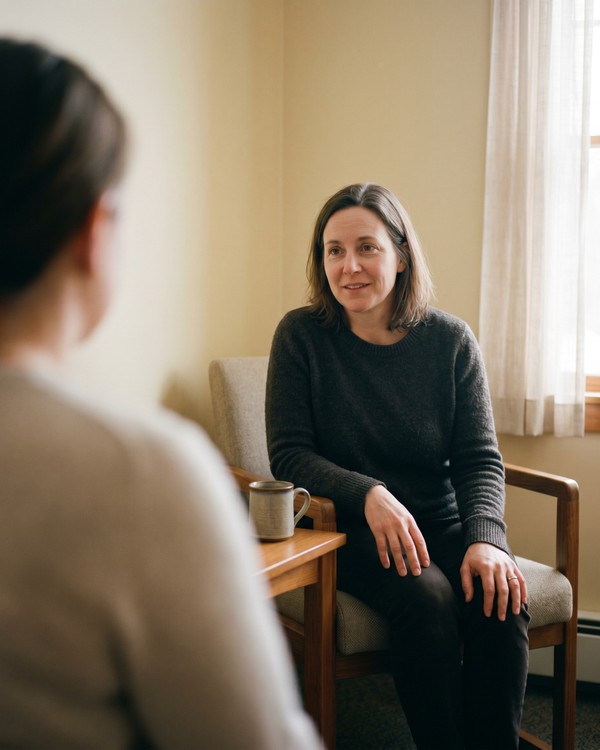
Female Maine community health counselor in a plain dark sweater seated in a small outpatient consult room afternoon, leaning slightly forward in active listening toward a client seen out of focus from behind in the foreground, warm window light
Alcohol addiction treatment in Maine

Treatment for alcohol addiction in Maine.

Outpatient medical and behavioral treatment for alcohol use disorder at our clinics in Augusta and Sanford. FDA-approved medications including Vivitrol®, Campral®, and Antabuse®, paired with weekly individual therapy and IOP-level group support. We don’t run an insurance-dictated discharge clock, and we don’t discharge people for relapsing.

How we treat alcohol addiction

Medication can help with alcohol addiction.

Medication and therapy are not alternatives. The medication eases the biology of cravings and the drink-reward response so the therapy can do the rest. Your medical provider sequences both to your specific situation.

Vivitrol® (naltrexone)

Monthly injection or daily tablet

Blocks alcohol’s rewarding effects so the drink doesn’t produce the usual feeling. Vivitrol® is a monthly extended-release injection administered in clinic and is the most-prescribed form at Enso for alcohol use disorder. A daily oral tablet of the same medication is also available. Either delivery can be started while you’re still drinking. No detox or abstinence required first.

Campral® (acamprosate)

Reduces protracted withdrawal cravings

A different mechanism from naltrexone. Campral® quiets the long tail of post-sobriety cravings that surface in the weeks and months after stopping. Three doses per day. Typically introduced after initial abstinence is established rather than during active drinking.

Antabuse® (disulfiram)

Aversive medication for highly motivated clients

Produces an immediate unpleasant physical reaction when alcohol is consumed, which most clients describe as a strong deterrent. Best matched to people who want a hard external commitment, not to people in early ambivalence. Prescribed selectively after a clinical conversation.

Behavioral treatment

Individual counseling, IOP, and case management

Weekly individual therapy with a licensed clinician, IOP-level group when acuity warrants, and case management for the practical work around employment, family, and housing. Pairs with medication; neither piece does the whole job alone.

You don’t have to be sober to start treatment.

Vivitrol® and oral naltrexone can be prescribed while you’re still drinking. Active alcohol use isn’t a barrier to enrolling. Clinical intake captures where you actually are, and the plan starts from there. MaineCare accepted.

How alcohol addiction shows up

Signs of alcohol addiction.

Alcohol use disorder presents on a spectrum. Some of these will sound familiar; others may not. None require a final diagnosis before you can call us.

01

Drinking more or longer than intended.

You start with one drink and end up at five. You meant to stop hours ago, and the day is gone.

02

Wanting to cut down but not being able to.

You’ve tried to take a break or moderate, and it hasn’t held. The intention is there; the follow-through isn’t.

03

Cravings that interrupt the day.

A strong urge or pull to drink that arrives at predictable times or out of nowhere. The thought returns and is hard to put down.

04

Drinking is taking time away from things that matter.

Work, family, hobbies, sleep, money. Drinking is shaping the calendar more than the calendar is shaping the drinking.

05

Drinking despite the problems it is causing.

Health concerns, relationship strain, work issues, legal trouble, financial damage. The drinking continues anyway.

06

Tolerance or withdrawal.

Needing more alcohol to feel the same effect. Or feeling shaky, anxious, sweaty, or unable to sleep when not drinking. Both are clinical signs.

Several of these can be true at once and not feel like “addiction” yet. The clinical conversation is the same regardless of how you frame it. If any of this sounds familiar, call (207) 245-1800.

Honest about withdrawal

Alcohol withdrawal needs honest medical conversation.

For most clients at lower-to-moderate severity, treatment for alcohol use disorder can begin directly at the outpatient level. Vivitrol® or oral naltrexone can be prescribed while you are still drinking. Behavioral work starts the first week. No medical withdrawal management required.

For clients at higher severity, alcohol withdrawal can be medically dangerous and sometimes requires inpatient monitoring during the first 72 hours. Enso is an outpatient program; we do not provide inpatient detox. Our medical provider will assess your specific situation at intake and refer to a medically-supervised detox program when that is the right next step. We pick up the work the day after detox completes.

If you’re experiencing acute alcohol withdrawal symptoms right now, including seizures, severe tremor, confusion, hallucinations, or fever, call 911 or go to the nearest emergency department. Alcohol withdrawal can be a medical emergency and isn’t safe to manage at home.

When inpatient detox may be the right next step

Your medical provider will discuss the specifics of your situation at intake. The clinical indicators that typically warrant a higher level of care before outpatient treatment include:

  • Heavy daily drinking, especially morning drinking
  • Prior alcohol withdrawal seizures
  • Prior delirium tremens (DTs)
  • Other serious health conditions, including liver disease
  • Multiple prior unsuccessful outpatient detox attempts
Common questions about alcohol treatment

Questions people have before starting alcohol treatment.

No. Vivitrol® and oral naltrexone can be prescribed while you’re still drinking. Active alcohol use isn’t a barrier to enrolling at Enso. Campral® (acamprosate) is typically introduced after some initial abstinence, which your medical provider will sequence into the plan. The clinical intake captures where you actually are, and treatment starts from there.

Yes. We accept all MaineCare and Medicaid plans for alcohol use disorder treatment, including naltrexone, Vivitrol®, acamprosate, disulfiram, individual therapy, and IOP-level group treatment. MaineCare covers behavioral health and addiction treatment in full for plans in good standing. Our case managers handle prior authorization where required.

All four FDA-approved options. Vivitrol® (monthly extended-release naltrexone injection) and oral naltrexone (daily tablet) block alcohol’s rewarding effects. Campral® (acamprosate, three times daily, typically after initial abstinence) reduces protracted withdrawal cravings. Antabuse® (disulfiram) is an aversive medication for selected clients. Your medical provider matches the medication to your specific situation and goals, not to a default list.

For most clients at lower-to-moderate severity, no. Outpatient treatment can begin directly. For clients at higher risk during withdrawal, including heavy daily drinking, prior alcohol withdrawal seizures, prior delirium tremens (DTs), or other serious health conditions, the medical provider will assess and refer to a medically-supervised inpatient detox program. Enso doesn’t provide inpatient detox; we pick up the work the day after detox completes.

Same medication, different delivery. Vivitrol® is a monthly extended-release injection administered in clinic, which removes the daily decision and pairs naturally with outpatient cadence. Oral naltrexone is a daily pill, which requires a daily decision to take it. The clinical evidence on Vivitrol® shows strong retention and reduced relapse rates compared to daily oral medication in some populations. Your medical provider will discuss which is the right starting point.

Our goal is a full clinical evaluation with a medical provider (MD or NP) within 24 hours of your first call. Our admissions counselors answer Monday through Friday, 8:00 AM to 4:30 PM, and call back the next business day for off-hours messages. No referral required.

Yes. Outpatient treatment is structured to fit around employment, parenting, and other obligations. Naltrexone is daily or monthly; Vivitrol is a single monthly visit. Weekly individual therapy is one hour, available by telehealth at both clinics. IOP-level group runs three days a week when it’s the right level of care, with day and evening options.

You stay in treatment. A relapse is clinical information, not a discharge trigger. Your plan adjusts: visit cadence usually tightens, the medical team revisits the medication picture, the therapist works the stressor that drove the relapse. We don’t discharge people for relapsing.

Start alcohol treatment

We can help, even if you’re actively drinking.

You don’t have to quit on your own before reaching out. Fill out the form and a medical assessment is usually booked within 24 hours, with a plan that meets you where you are. Prefer to call? Admissions is a phone call away. MaineCare accepted, no referral required.