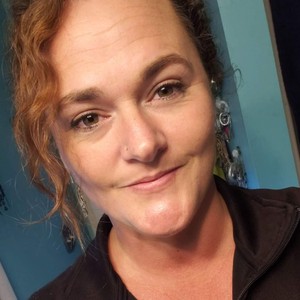
Amanda Hopkins
Billing Manager
Amanda brings years of diverse experience in the substance use disorder field to her role as a biller at Enso.
Enso is what Maine recovery looks like when nobody’s watching the clock. MARR-certified clinics in two cities, five recovery residences across the network, and a clinical team that doesn’t discharge people because the insurance ran out or the relapse happened.
Enso Recovery is in the business of staying with people. Not for the photogenic ninety days of treatment that look good on a referral letter, but for the months and years that recovery actually takes. We are the last house on the block. The place that picks up the work when the funding has run out, when the residential program closed their file on schedule, when the courtroom calendar wants a result that doesn’t match the clinical reality.
Outpatient addiction treatment in Maine isn’t short of providers. It’s short of providers who will keep showing up for the populations the rest of the system has quietly written off. Post-release clients. People coming through county jails. People with a string of unsuccessful treatment attempts behind them. Insurance companies set discharge timelines. We don’t. The work continues for as long as it needs to.
That refusal is Enso’s promise and operating model rolled into one. Everything we offer, MAT and IOP and outpatient therapy, medication management for co-occurring mental health conditions, case management, MARR-certified recovery residences, the in-jail clinical work, is built around the premise that you shouldn’t have to leave when leaving is what got you stuck in the first place.
The ensō (円相) is a Japanese Zen calligraphic circle drawn in a single uninhibited brushstroke. The open ensō, the one that does not close fully on itself, represents continuing growth and imperfection. A recovery thesis in a single mark.
To be Maine’s leading provider of opioid use disorder treatment, and a regional model for what outpatient recovery looks like when the research backs it.
For more than a hundred years, recovery has been defined more by moral judgment than by science. The dominant treatment model has been abstinence-only, often built around the twelve-step framework. The results have been mixed. For people addicted to opioids, the relapse rate over the past decade has forced doctors and counselors to rethink the standard.
Medication-assisted treatment has been the gold standard for opioid addiction for more than fifty-five years. It is the only outpatient treatment for opioid use disorder the research actually supports. We treat it the way doctors treat diabetes with insulin: a medicine that manages a chronic medical condition. It is not trading one drug for another. That thinking is wrong about this, and we ask clients, families, and referring partners to set it aside.
The pain behind it has to be understood for any of the rest of the work to land.
Recovery has to address that trauma at the pace the person can handle. The work isn’t optional, and it’s rarely a straight line.
The substance is often the symptom. Treating only the substance use leaves the rest in place.
Medication-assisted recovery works for many people. Abstinence-based recovery works for others. The job is to find what works for you.
We support what you decide, watch how it’s going, and adjust the plan with you. You’re the author of it, not us.
Our job isn’t to make the choices for you. It’s to help you carry them.
Recovery has to cover all six. Working on one without the others doesn’t hold.
If any of this lines up with how you think about recovery, start here.
No screening gate, no triage waitlist, no referral required. Admissions reviews your situation directly and books an assessment with a medical provider, normally within 24 hours. MaineCare accepted.
Clinicians, case managers, billing, administration. Several members of the team have personal recovery experience. Several don’t. All of them stay.
Amanda brings years of diverse experience in the substance use disorder field to her role as a biller at Enso.
Amber brings over 13 years of social work experience and a Master’s in Social Work to her leadership role.
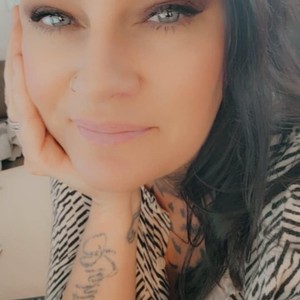
Elizabeth holds a Master’s in Depth Psychology and is pursuing a PhD, combining clinical expertise with a focus on self-actualization.

Kat is a Certified Alcohol and Drug Counselor with a Bachelor’s in Human and Rehabilitation Services and a minor in Advanced Addictions.
A substance use clinician since 2020, Megan draws from personal recovery experience to support clients moving from incarceration into outpatient care.
Enso is certified by the Maine Association of Recovery Residences (MARR) at Level II and Level III across the five recovery residences in our network. MARR certification is the state’s recognition that a recovery residence meets clinical, safety, and operational standards. It’s also what establishes the residential side of our continuum as a clinical service, not a rental.
We were the first program in Maine to bring medication-assisted treatment inside county jails. Sentenced clients begin MAT behind bars; on release, the same clinical team picks up the work at the outpatient level the same day or the next. The warm handoff is the intervention.
Long-acting injectable MAT is a clinical priority here. Roughly 40% of our MAT clients are on Sublocade® or Brixadi®, a share materially above the Maine market, and a share the state and federal payers actively incentivize. Enso is also a state and national advocate for pre-arrest diversion, a direction Maine has moved toward in recent years.
Insurance and funding are the most common reasons people delay calling. We’ve built the operating model so the answer to “can I afford this” is yes, almost without exception.
Covers MAT, IOP, outpatient therapy, medication management, and case management in full for plans in good standing. Our case managers handle prior authorization and enrollment for clients not yet covered.
Medicare beneficiaries are covered for outpatient addiction treatment and behavioral health services.
Most private insurance in Maine covers MAT, IOP, and outpatient therapy as behavioral health services. Coverage details depend on the plan; admissions verifies at intake.
A Maine-administered federal-state funding pathway for opioid-dependent qualifying clients. We enroll directly for clients without traditional insurance.
Federal grant funding for opioid crisis response. Available for clients who do not qualify for MaineCare, Medicare, or private coverage.
For clients who do not fit any of the above, a sliding fee scale based on income. Nobody is turned away for financial reasons.
Admissions verifies your specific coverage during the intake call. The conversation is direct and takes less than ten minutes. Call (207) 245-1800.

So does recovery.
Family members are often the first to see the problem, the last to give up, and the most exhausted of everyone involved. The worry, the helplessness, the late-night calls, the showing up at the wrong moments and not showing up at the right ones. The damage spreads.
Recovery moves the same way. When someone walks through the door of an Enso clinic, the people who love them feel it. Sleep returns. The phone calls change. The house quiets down. Healing is not a one-person job, and we do not treat the clinical work that way.
Families can call us first, before the person who’s struggling is ready to call. We talk through the situation, what treatment actually looks like, and what comes next, including things you can do on your own. No commitment required. When it makes sense for your situation, and with your loved one’s consent, families are part of the treatment plan: education about what’s happening, family sessions, and clear expectations about what recovery asks of everyone.
Families call admissions at (207) 245-1800. Monday through Friday, 8:00 AM to 4:30 PM.
There’s no intake committee and no qualifying process. Fill out the form and the person who reviews it can book your assessment. Prefer to talk it through first? Admissions is a phone call away. MaineCare accepted, no referral required.